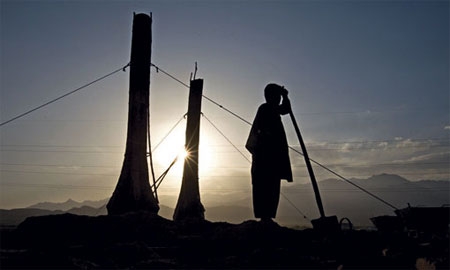
Since 2002, Angola has made tremendous progress in its reconstruction programmes. So devastating was the 27-year war that for all intents and purposes, Angola’s Government had to start from scratch.
The speed at which this has occurred can largely be attributed to international cooperation, as well as the country’s oil wealth, which has brought in much-needed revenues. The reconstruction efforts have also given way, rather conveniently, to economic diversification. Construction, agriculture and all manner of infrastructure, for example, are both big business and pressing needs in Angola.
From homes, hospitals, schools, telecoms and water networks to ports, roads and railroads, there is a massive call for new and rebuilt basic services, which also entails growing the building materials industry. Various programmes are also under way to revive the once powerful and self-sustaining agricultural sector.
Growth of the non-oil sector has even begun to outpace that of the hydrocarbon sector, opening up a positive cycle: a more diversified economy means international confidence in Angola is rising resulting in greater investment in a wide variety of sectors, more job creation, an increasingly stable economy, a drop in inflation (according to Angola’s Secretary of State for Economic Coordination) and improved living conditions for Angolans.
The country still has a long road ahead to eradicate its widespread poverty, yet the progress achieved since 2002 should not be understated. The UN’s resident coordinator in Angola announced in 2010 that poverty levels, measured in monetary income, dropped from 63 per cent nine years ago to 38 per cent in 2009.

















0 COMMENTS